Antique Georgian George IV Scottish Sterling Silver Stilton Scoop CLAN MUNRO
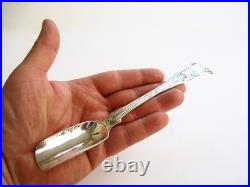
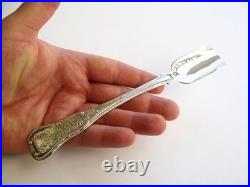
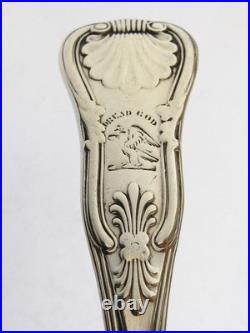
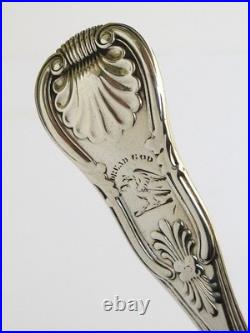
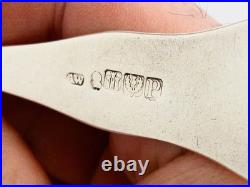
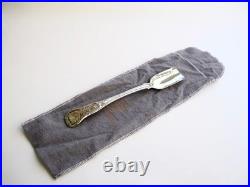
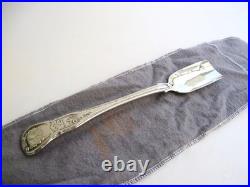
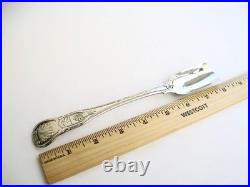
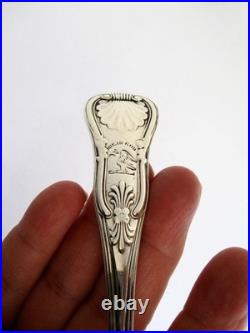
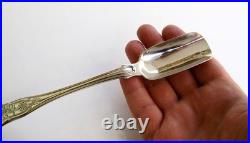
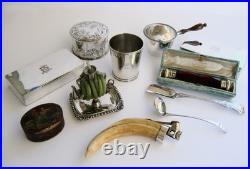

This listing is for a rare lovely, large, and impressive Scottish Sterling Silver Stilton Scoop (a cheese spoon) dating back to post "Regency Period, " the reign of King George IV. This ancient survivor was made by the noted silversmith Andrew Wilkie, and bears beautiful, bold, and clear hallmarks for being made in Edinburgh, in 1821. Be sure to also review the last photo in this listing, which shows all the other fantastic Scottish 19th century silver collectibles that I have listed this week, including a Georgian Scottish silver tea caddy, Georgian Scottish silver toddy ladle, a Victorian ruby red lay-down perfume bottle in its original case, a Georgian silver wine strainer, two lovely Victorian sandwich boxes, a rare American coin silver mint julep cup, an 18th century French snuff box, a boar tusk cigar cutter, and an Arts & Crafts "wax jack"! Back to this impressive Stilton cheese scoop! It has a beautifully engraved crest and motto "Dread God" which is the clan motto of Clan Munro, as well as shell and foliage decoration throughout.
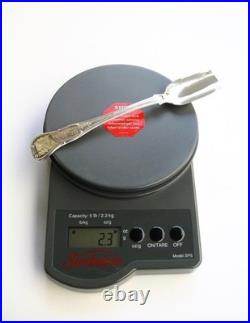
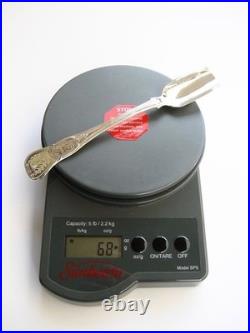
The scoop is 8.25 inches long and weighs a hefty 2.3 ounces (68 grams). What is a stilton scoop? A stilton scoop is a specialized serving utensil designed for cutting and lifting portions of Stilton cheese, the famous English blue cheese that is traditionally made and served in large, tall cylindrical rounds. Because Stilton has a crumbly yet creamy interior and a firmer outer crust, ordinary knives tended to compress or smear the cheese. The stilton scoop solved this problem by allowing diners to extract neat, intact portions from the center of the cheese.
We don't really serve much Stilton in America (although I suppose you can find it in some places) so we don't have very many antique silver Stilton scoops here, much less ones from Scotland! Is antique Scottish silver rare? Scottish Georgian silver is very rare, and especially so to find in the US, and so this piece is a great find.
Shrubsole (probably the best antique silver dealer in the USA) and it came to me and will come to you! Some information on this Regency silversmith, Andrew Wilkie. Andrew Wilkie was a respected Scottish silversmith active during the late Regency period, working primarily in Edinburgh in the early 19th century.He belonged to that generation of craftsmen who helped shape Edinburgh's reputation as an important center of silver production, second only to London in quality and artistry. Wilkie appears in the Edinburgh assay records of the period, and his maker's mark is found on a range of fine domestic and personal silver items, including spoons, ladles, tablewares, and more decorative pieces typical of Regency taste. I've seen records of him from around 1811, with formal hallmark registration around 1818. The Regency silver aesthetic, which is to say, elegant, restrained, and often classically-inspired, is reflected in Wilkie's surviving silver work.
His pieces commonly feature clean lines, balanced proportions, and subtle decorative details such as bright-cut engraving or neoclassical motifs. Like many Edinburgh smiths of the time, he worked within a strong guild tradition, adhering to the city's strict standards of craftsmanship and hallmarking.
This system ensured that silver made in Edinburgh maintained a high degree of consistency and quality. Activity spanned a couple of decades, his silver items are rare to find today.
His output illustrates both the skill of independent Scottish makers and the flourishing domestic market of Regency Britain, when increasing prosperity created demand for finely made household silver. If you collect Scottish silver, you should have in your collection a piece bearing Andrew Wilkie's mark, to be appreciated for its craftsmanship, historical interest, and its place within the broader story of Scottish silver during one of its most refined stylistic periods. Some information on Clan Munro, whose armorial is engraved on this spoon. Clan Munro is a historic Highland Scottish clan traditionally associated with Easter Ross, particularly the lands around Foulis Castle, which has served as the clan seat for many centuries. The Munros were long regarded as loyal supporters of the Scottish Crown, and their early history places them at the northern frontier of royal authority, often engaged in defending the region from Norse incursions and later from rival Highland clans. The clan's motto, "Dread God, " engraved on this spoon, reflects a deep-rooted Calvinist and martial ethos.Rather than expressing fear, the phrase emphasizes reverence, moral discipline, and the belief that courage in worldly matters flows from a proper awe of divine authority. This spiritual focus is mirrored in the clan's steadfast reputation, as the Munros were known for their reliability in military service, fighting in many of Scotland's major conflicts from the medieval period through the Jacobite uprisings. Notably, unlike several other Highland clans, the Munros generally supported the government side during the Jacobite risings of 1715 and 1745. Prominent figures that came from this clan include Robert Munro, the "Black Baron", famed for his leadership during the Thirty Years' War, and various chiefs who served as soldiers, statesmen, and land stewards. Today, Clan Munro remains active worldwide through heritage societies and gatherings, preserving a legacy of loyalty, piety, and Highland resilience embodied in their enduring motto, Dread God.
I want to make you happy so feel free to ask me questions or ask for another photo if it's necessary - and I will do my very best to answer your questions within a 24-hour period! Finally, do look at all my other listings this week for high quality antiques and collectibles!