Sterling Silver Scottish Celtic Penannular Brooch Pin Antique Fibulae Hallmarks
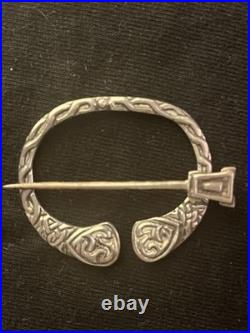
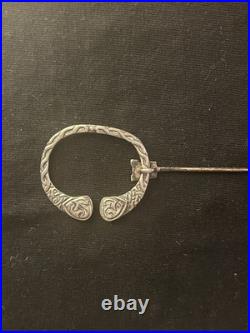
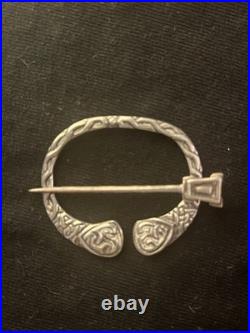
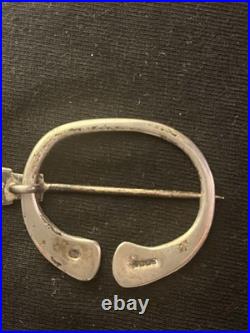
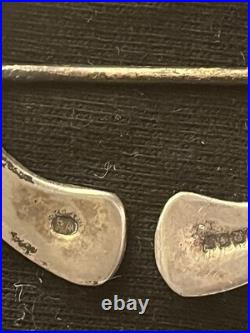
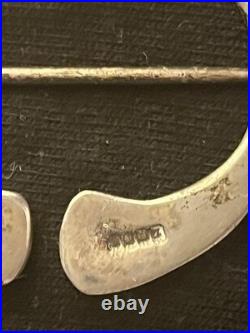

Great and collectible, old, sterling silver, original Celtic knot brooch with full hallmarks from the WWII era - 1941 Sheffield. This brooch may be one of the few surviving examples from his earliest period of Robert Allison, and it was created in a historically difficult year for the jewelry industry. An interesting, rare, collectible silver hallmark is another advantage of this brooch. This is a stylized silver penannular brooch i. An open, Celtic clasp, inspired by early medieval fibulae from the British Isles (Viking/Celtic revival). Decorated with braided motifs (triskeles, Celtic knots) characteristic of Norse and Anglo-Saxon cultures. The brooch is made of. 925 silver and was officially hallmarked in Sheffield in 1941. The maker is Robert Allison. Robert Allison was a Scottish jeweler who officially began his business by registering in Glasgow in 1941, after gaining experience and training in Birmingham.
In 1954, his son James joined him, establishing Robert Allison & Son, officially registered in Glasgow and continuing in business until approximately 1982. Before establishing his own business and registering the mark in Glasgow, the craftsman likely used larger centers like Sheffield or Birmingham after the education, especially during the war. This may be the first edition of this design, made or commissioned early in his career - a sort of "first edition" of this design of Robert Allison's brooch. This type of brooch is a stylized reconstruction of Scots-Irish fibulae from the Iron Age and early Middle Ages e.
The popularity of such designs increased during the Celtic Revival period (late 19th century) and also in the 1930s-1950s, driven by the wave of Celtic romanticism and historical memorabilia. The penannular shape (an open ring with a spearhead) is the classic form of a Celtic brooch or Viking fibula, used to fasten cloaks, scarves, and tunics. Symmetrical, stylized decorations are typical of the insular style (combining Celtic and Norse elements), characteristic of art from Ireland, Scotland, and Orkney. Triskelion (triple spiral) - One of the oldest and most important Celtic symbols. It represents the cyclical nature of life: birth, life, death (and rebirth), past, present, future, body, mind, and spirit.In the context of a brooch, the triskelion can symbolize balance in life and protection during journeys-which is particularly meaningful in an item from times of war. The penannular shape (an open ring) symbolizes an endless cycle and openness (as opposed to complete closure). Considered as protective amulets and signs of social status.
In Viking or Pictish era brooches, the penannular form combined practicality and ritual significance. During World War II, silver jewellery was still being produced in Britain, although less frequently - so this brooch is rarer and more valuable because it dates from the period of silver rationing. This wartime-era piece may have been worn as a talisman - a tangible link to ancestral strength and heritage.